Posted on 9/29/2026
%20copy.jpg)
A BMW that hesitates when you pull away can leave you with several unfamiliar terms on a diagnostic report. VANOS appears in one fault description, Valvetronic in another. Both involve the valves and can affect how the engine runs, so it's easy to assume they're just two names for the same repair. They aren't. Before authorizing a solenoid, motor, or cylinder-head repair, you should know which adjustment is failing and what testing supports that conclusion. The driving symptoms overlap enough that the dashboard message alone to separate them. VANOS Changes Timing; Valvetronic Changes Lift VANOS adjusts when the valves open and close by changing camshaft timing. On many BMW engines, oil pressure moves the camshaft adjusters under electronic control. This lets the engine use different valve timing at idle, during acceleration, and at higher speeds. Valvetronic changes how far the intake valves open. An electric motor and eccentric-shaft ... read more
Posted on 8/28/2026

Land Rover and Range Rover are names people often use as though they mean the same thing. That makes sense when you see both names connected to similar SUVs, shared technology, and the same British automotive heritage. The difference becomes clearer once you look at how the vehicles are positioned. Land Rover is the broader name historically associated with the SUV lineup, while Range Rover refers to the more luxury-focused family within that group. That distinction affects styling, equipment, performance options, and even the type of maintenance we commonly see. Range Rover Is a Vehicle Family, Not a Separate Manufacturer Range Rover started as a specific Land Rover model and eventually grew into a family of luxury SUVs. Today, drivers commonly recognize names such as Range Rover, Range Rover Sport, Range Rover Velar, and Range Rover Evoque. These vehicles share the same general Land Rover heritage but place a stronger emphasis on premium interio ... read more
Posted on 7/31/2026
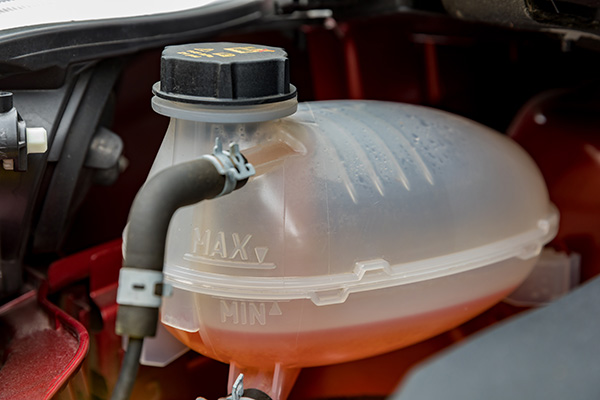
A Volkswagen coolant leak can begin with a faint sweet smell, a low coolant message, or dried pink residue around the engine. The vehicle may continue driving normally at first, which makes the problem easy to postpone. As the leak grows, coolant loss can lead to unstable engine temperature, poor cabin heat, and overheating. Water pumps and thermostat housings are two frequent leak sources on many Volkswagen engines. Depending on the model, they may be combined into one assembly or mounted close together. Plastic construction, seals, heat cycles, and cooling system pressure can all contribute to failure as the vehicle ages. Why Volkswagen Water Pumps Begin Leaking The water pump circulates coolant through the engine, radiator, heater core, and related passages. Some Volkswagen engines use a mechanically driven pump, while others rely on an electric pump or a pump built into a larger thermostat module. A seal or housing can begin leaking even if the ... read more
Posted on 6/26/2026
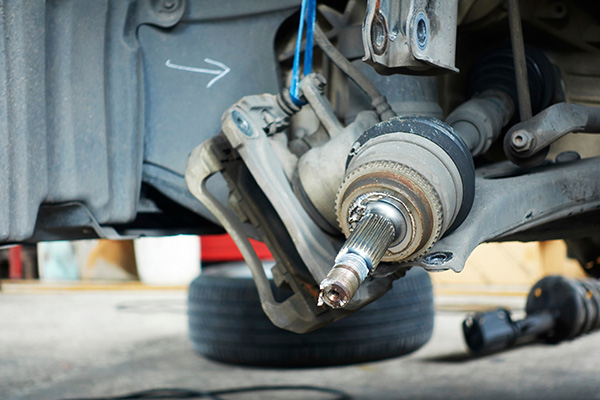
Most drivers do not think much about axles until something starts clicking, vibrating, or feeling wrong while driving. At our shop, that is usually how the conversation starts. Someone comes in and says the car makes a strange noise when turning, or the steering feels off, or there is a grease-like mess near one of the wheels. Then we take a closer look and find that the axle system is where the trouble begins. Axles are one of those parts of the vehicle that quietly do a huge amount of work. They help transfer power from the engine and transmission to the wheels so your vehicle can actually move. They also deal with turning, suspension movement, bumps in the road, and constant rotation every time you drive. So when an axle starts wearing out or gets damaged, the symptoms can show up in a lot of different ways. The good news is that axle problems usually leave clues before they become major breakdowns. Understanding what axles do and the common repairs we see can help drivers catch t ... read more
Posted on 5/29/2026

Mercedes-Benz vehicles can make small problems feel deceptively quiet. A warning message appears, the car still feels refined, and nothing sounds broken. Then a scan shows the issue is tied to a system that most basic code readers barely understand. That is part of what makes these repairs different. Mercedes-Benz repair is specialized because the vehicles combine tight engineering, advanced electronics, specific service procedures, and parts that need to work together correctly. A repair that seems simple on the surface can involve several systems behind the scenes. Mercedes-Benz Systems Share Information Constantly Modern Mercedes-Benz vehicles rely on control modules that constantly communicate with one another. The engine, transmission, brakes, suspension, steering, battery management, climate control, lighting, and driver-assist systems can all share data. One warning may not indicate a single isolated failure. A weak battery can trigger several messages. A w ... read more
Posted on 4/28/2026
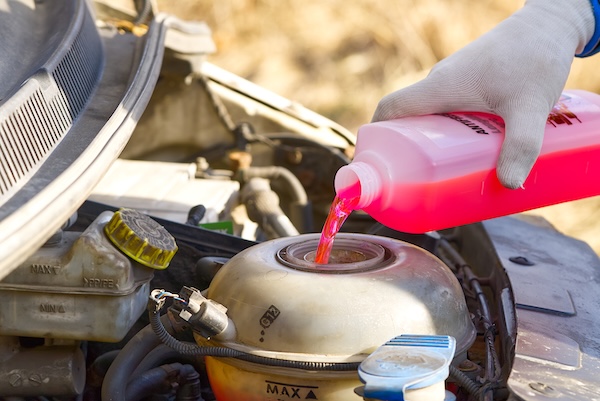
It is a question we hear all the time at our shop. Drivers are usually familiar with oil changes, brake service, and tire rotations, but fluid flushes tend to feel less straightforward. Because of that, many people assume they are optional or only needed when something goes wrong. In reality, fluid flushes are often a key part of keeping a vehicle dependable, safe, and protected from unnecessary wear. The truth is that your vehicle relies on several different fluids every time you drive. These fluids do much more than simply fill a system. They help control heat, reduce friction, prevent corrosion, transfer hydraulic force, and keep major components working the way they should. Over time, though, those fluids break down. They collect contaminants, lose their protective qualities, and stop performing at the level your vehicle needs. That is why fluid flushes matter. They are not just another maintenance item on a checklist. They are a way to help prevent larger problems from developing ... read more
Posted on 3/27/2026

A license means a teen is legally allowed to drive. It does not automatically mean they are ready for every small decision that comes with driving alone. The stress new drivers feel has less to do with speed and more to do with the little moments that pile up fast, like parking in a tight lot, reacting to a warning light, or knowing what to do when something about the car feels off. That is why learning the basics will benefit them so much. 1. Set The Seat, Mirrors, And Steering Wheel Correctly A teen driver should know how to sit high enough to see well, far enough back to control the pedals comfortably, and close enough to steer without stretching. Mirrors matter just as much. A bad mirror setup creates unnecessary blind spots and makes lane changes feel harder than they should. 2. Learn How To Park Without Rushing Parking is one of the first places nervous driving shows up. A new driver should be comfortable ... read more
Posted on 2/27/2026
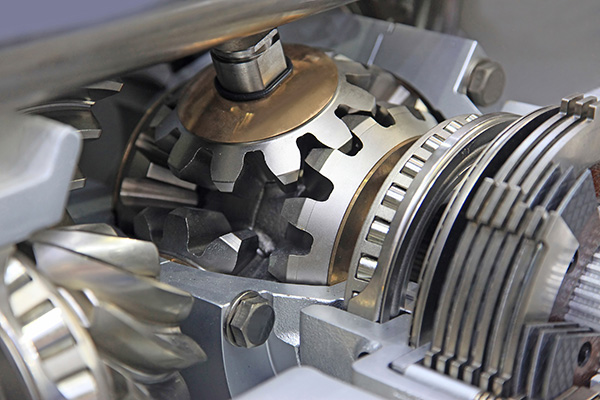
If your vehicle has 4x4 or AWD, the transfer case is the part that makes that extra traction possible. It sits behind the transmission and routes power to the front and rear axles, depending on how the system is designed. Most drivers never think about it until something feels off, like binding in tight turns, unusual noises, or a warning light. Knowing what it does makes it easier to understand why fluid service and small symptoms matter. Transfer Case Basics For 4x4 And AWDA transfer case is a gearbox that takes power from the transmission and sends it to both ends of the vehicle. In a traditional 4x4, it can usually send power to the rear wheels only, or to all four wheels when you select 4WD. In many AWD vehicles, it is part of a system that automatically varies how much power goes front and rear based on traction needs. Either way, it is the ... read more
Posted on 1/30/2026

You check the oil after a few weeks, and it is already lower than you expected. The car still drives fine, so part of you wants to shrug it off. Another part of you is thinking about what oil is doing under the hood and why it seems to be disappearing. With Mini Coopers, oil use can land anywhere from totally normal to a sign that something is starting to fail. The trick is knowing where that line is, and spotting the clues before it turns into smoke, misfires, or a warning on the dashboard. Why Mini Coopers Can Use Oil Between Changes Oil consumption happens when oil is burned in the combustion process or pulled through the intake system. Some engines use a small amount by design, especially as mileage adds up. Turbocharged engines can also be harder on oil because heat and pressure are higher, and the engine is working harder more often. Mini Coopers are also sensitive to maintenance habits. Oil levels that stay a little low for too long can speed up wear, and sh ... read more
Posted on 12/19/2025
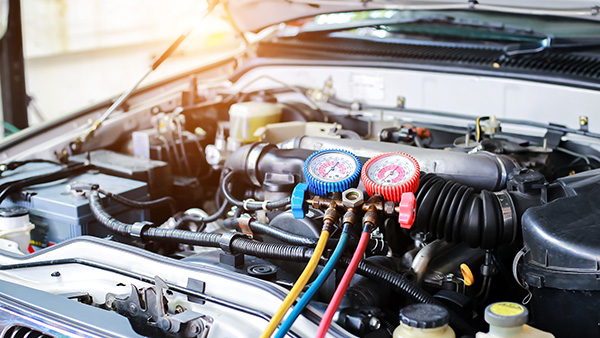
A Mercedes-Benz can spoil you on a hot day. The cabin cools quickly, the airflow feels smooth instead of harsh, and the climate control quietly keeps everything where you set it. That comfort makes it easy to forget the A/C system is working hard every time you press the button. A little routine care keeps it performing like a luxury system instead of slowly sliding toward warm, noisy, or unreliable. Why Mercedes-Benz A/C Maintenance Deserves Extra Attention Your Mercedes uses a more sophisticated climate system than many basic vehicles. Multi-zone controls, sensors, and airflow doors all work together to keep temperatures balanced and quiet. When everything is clean and properly charged, you barely have to think about it. The flip side is that small issues can snowball if they are ignored. Low refrigerant, poor airflow, or a weak auxiliary fan can stress the compressor and other parts. We often see cars come in with “it still cools, just no ... read more